A clear reference for travel advisors, retreat leaders, and wellness professionals navigating a category that is often misrepresented.
Ayurveda travel is not what most people think it is
Ask ten people in the wellness travel industry what Ayurveda travel means, and you will likely get ten different answers.
Some will describe a spa with herbal treatments. Others will mention yoga retreats in India. A few will reference detox programs or Ayurvedic-inspired menus at a luxury resort.
These associations are understandable. But most of them are incomplete.
Ayurveda travel, practiced properly, is something more specific. And for travel professionals who want to offer it credibly, that distinction is worth understanding clearly.
What Ayurveda actually is
Before getting into travel, it helps to understand the system itself.
Ayurveda is one of the world’s oldest systems of medicine, originating in India more than 5,000 years ago. It is not a philosophy or a lifestyle trend. It is a structured clinical system with its own methods of diagnosis, treatment, and prevention.
At its core, Ayurveda works with the understanding that health is not a fixed state. It is a dynamic relationship between the individual and their environment, shaped by constitution, digestion, sleep, stress, and daily rhythm.
Treatment in Ayurveda is not standardized. It is individualized. Two people with the same complaint may receive entirely different protocols, because the approach is based on the person, not just the condition.
This is what makes it distinct from most modern wellness programs, and why it cannot be reduced to a menu of treatments.
What Ayurveda travel actually is
Ayurveda travel is the experience of engaging with Ayurveda as a complete medical system, within a setting specifically designed to support that process.
A genuine Ayurveda travel experience typically includes:
• An initial consultation with a qualified Ayurvedic doctor
• A personalized treatment plan based on the guest’s constitution and current condition
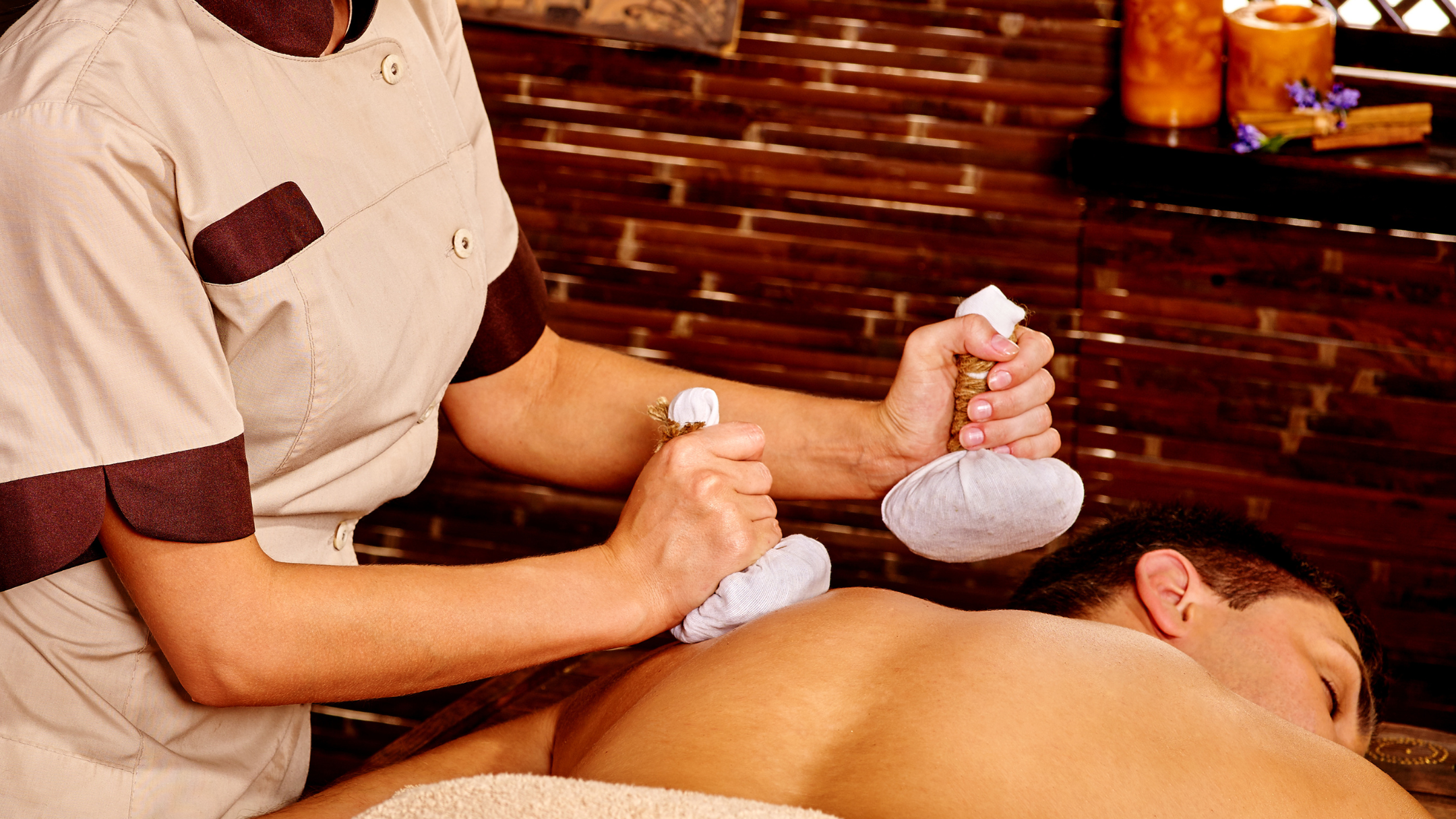
• Daily therapies applied in a specific sequence
• A therapeutic diet prepared to support the individual’s program
• A structured daily rhythm that includes rest, movement, and regulated activity
• Ongoing doctor consultations to adjust the program as the body responds
The environment itself is considered part of the treatment. Quiet surroundings, clean air, natural materials, and attentive care are not amenities. They are conditions that allow the system to work.
This is a medical experience delivered in a travel context. That framing matters.
What Ayurveda travel is not
This is where clarity becomes important for anyone working in this space.
Ayurveda travel is not:
• A spa that offers Ayurvedic-inspired treatments
• A wellness retreat that includes yoga, meditation, and an herbal massage
• A short reset program with an Ayurvedic menu
• A detox experience designed around comfort and aesthetics
These experiences can be valuable in their own right. But they are not practicing Ayurveda as a system, and positioning them as such creates confusion for clients and undermines the category.
When Ayurveda is removed from its clinical framework, it becomes decorative. When it is shortened below the minimum required time, it loses effectiveness. When it is generalized to suit a broader wellness audience, it stops being Ayurveda.
The distinction is not about being purist. It is about being accurate.
Why structure and duration matter
One of the most common misunderstandings among clients, and sometimes among travel professionals, is that a two or three day Ayurveda experience is equivalent to a longer program, just smaller.
It is not.
Ayurveda programs are designed in phases. The body needs time to prepare before deeper treatments can be applied, and time to integrate and rebuild after them. This is why programs are typically structured over 7, 14, or 21 days.
Shorter stays can offer an introduction to the practice. They are not designed to produce therapeutic outcomes.
Understanding this helps travel advisors set accurate expectations with clients from the start, which leads to better experiences and fewer mismatches.
Where Ayurveda travel happens
India remains the primary home of Ayurveda. Kerala in particular has a deep tradition of clinical practice, with established lineages, trained physicians, and institutions that have been operating for generations.
Ayurveda is also practiced in a small number of destinations outside India, where qualified doctors are working within the system and maintaining its clinical integrity. These are not approximations. They are genuine extensions of the practice into new contexts.
The geography matters less than the question of whether the system is being practiced properly. A property in Sri Lanka or Germany with a qualified Ayurvedic medical team may deliver a more authentic experience than a resort in Kerala that has reduced Ayurveda to a spa add-on.
Knowing how to evaluate that difference is part of what defines a knowledgeable travel professional in this space.
Why this category is worth knowing well
Wellness travel is growing. So is client demand for experiences that go beyond relaxation and produce lasting results.
Ayurveda sits at the intersection of those two directions. It is structured, personalized, and outcome-focused by design. For clients dealing with fatigue, poor sleep, digestive issues, stress, or hormonal imbalance, it offers something most wellness programs do not: a complete and supervised clinical approach.
For travel advisors and retreat leaders who understand it clearly, Ayurveda travel is not just another offering. It is a distinct category that attracts a specific and committed type of client.
OJAS works specifically within this space, connecting qualified Ayurveda properties with travel and retreat professionals who want to offer this category with confidence. If you are building this into your business, it is worth understanding what you are actually working with.
Frequently Asked Questions
What is Ayurveda travel?
Ayurveda travel is the experience of receiving Ayurvedic care as a complete medical system within a dedicated travel setting. It involves consultation with a qualified Ayurvedic doctor, a personalized treatment plan, prescribed daily therapies, therapeutic diet, and a structured program typically lasting 7, 14, or 21 days. It is distinct from general wellness travel in that it is clinically guided and individually prescribed.
How is Ayurveda travel different from wellness travel?
Wellness travel is a broad category that includes spa breaks, fitness retreats, mindfulness programs, and various health-focused experiences. Ayurveda travel is a specific subset with a defined clinical structure. The key differences are the presence of a qualified Ayurvedic doctor, individualized treatment protocols, therapeutic diet, and a program designed for measurable outcomes over time. Wellness travel is often designed around comfort and relaxation. Ayurveda travel is designed around restoration and rebalancing through a structured medical framework.
+ Comments